

White House press ban: what changed, and why journalists say the public loses
Three news organizations are challenging their exclusion from the White House, turning a dispute over presidential coverage into a court fight over access, retaliation and due process. CNN, MS NOW and Politico filed suit Monday, September 21, after their journalists were turned away over the weekend. This is a ban affecting named outlets, not an expulsion of every journalist covering the president.
For readers trying to follow the story, three things need separating: what the administration has done, what the challengers argue, and what a court has actually decided. A forceful statement from either side is not a judicial ruling.
What the White House says
In its September 21 statement, the administration confirmed that President Donald Trump had removed CNN, MS NOW and Politico from White House grounds. It accused the organizations of false reporting and argued that constitutional protection for publication does not create an entitlement to credentials, a briefing-room seat or a place in the press pool.
The statement also pointed to disputes involving earlier Democratic administrations. Those comparisons are part of the administration’s defense of its decision. They do not, by themselves, settle whether this particular restriction satisfies constitutional requirements.
The distinction matters: protecting a building and managing limited space are different questions from whether officials may exclude an outlet because they dislike its coverage. The parties disagree about how that distinction applies here.
Source: https://www.whitehouse.gov/releases/2026/09/white-house-access-is-a-privilege-not-a-right/
What the outlets are asking the court to do
CNN’s reporting says the organizations are seeking immediate restoration of access and alleging violations of the First Amendment and due-process protections. Reporters cannot reach their White House workspaces; CNN and MS NOW also cannot use their equipment and camera positions on the grounds.
The same report says a hearing on their request for a temporary restraining order is scheduled for Wednesday, September 23, before Judge Timothy J. Kelly. A scheduled hearing is not an order restoring access. No ruling resolving this new ban was verified in the reporting reviewed for this article.
CNN is both a plaintiff and a reporting source here. Its account of the lawsuit should be read with that role clear. The organizations say their government coverage will continue despite the restrictions.
Why press-freedom groups object
The Reporters Committee for Freedom of the Press argues that once officials admit journalists, they cannot exclude others simply because of their reporting. Its president, Bruce D. Brown, describes that as viewpoint discrimination. He predicted a successful legal challenge; that prediction is advocacy and legal analysis, not the outcome of this case.
The group’s concern extends beyond the three companies. If unfavorable reporting can cost a newsroom its access, other reporters may face pressure when deciding which questions to ask and which stories to pursue. That is the chilling effect its criticism describes, rather than proof that every newsroom has already changed its work.
Source: https://www.rcfp.org/statement-white-house-ban-politico-cnn-msnow/
The Committee to Protect Journalists likewise condemned the decision as an effort to control coverage and warned about the constitutional implications. Its argument connects journalists’ ability to gather news with the public’s ability to scrutinize government. Readers can disagree with a newsroom’s work while still evaluating whether officials should control access on the basis of that work.
What this means for freedom of speech
My view: I believe this threatens freedom of speech.
The immediate legal dispute concerns newsgathering access and alleged government retaliation. The outlets remain able to publish. Their argument is that the government cannot use the removal of access to punish protected reporting. The administration disputes that characterization and emphasizes its authority over access.
The next development to watch is the court’s response to the request for temporary relief. Any account of that response should identify exactly what the judge orders, which facilities or activities it covers, and whether the decision is temporary or a final resolution. Until then, the competing arguments should stay clearly attributed.
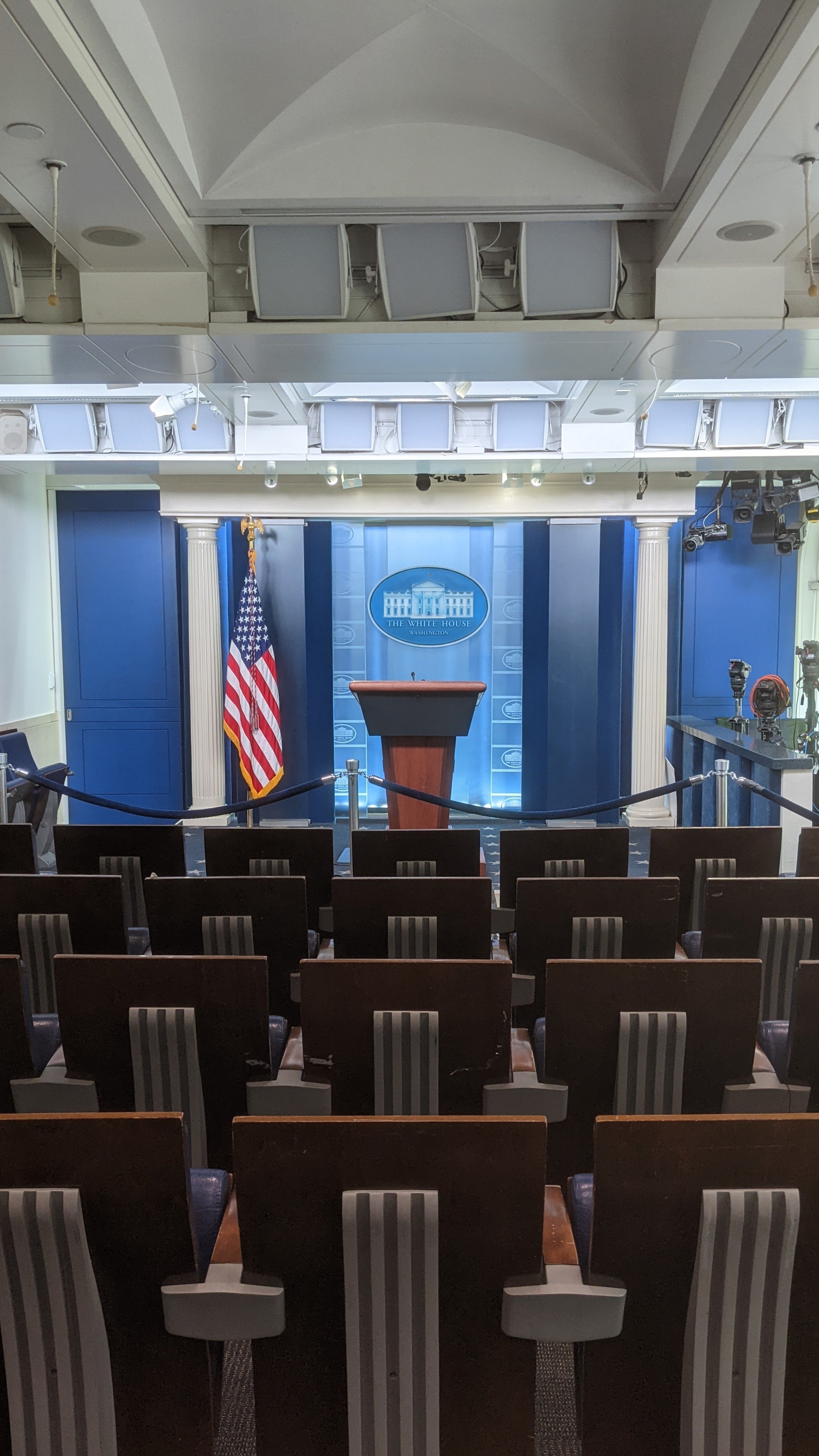
Photo: Empty White House briefing room, archival photograph from 2022; not a photograph of the current ban. CabbageFuel / Wikimedia Commons, CC BY-SA 4.0. Platform cropping may apply, under the same license.
https://commons.wikimedia.org/wiki/File:White_House_briefing_room_empty.jpg
https://creativecommons.org/licenses/by-sa/4.0/
