

Care shouldn’t depend on signing away your objections
A care worker’s shift may end. A disabled person’s need for help doesn’t.
That’s why Pennsylvania’s latest Medicaid lawsuit deserves more than a headline about government paperwork. The real question is what happens at home when a rule restricts who can be paid to provide care—and whether the state can impose that rule through an enrollment form after losing an earlier court challenge.
I want accountability here. A promise to support independent living has to survive contact with the decisions that determine whether somebody can actually stay home.
What the families are challenging
Four disabled Pennsylvanians filed Byrne v. Commonwealth, docket 418 M.D. 2026, in Commonwealth Court on September 16. Their lawyers describe it as a class action seeking to invalidate restrictions imposed through participant-directed service agreements. Filing a class action does not itself mean a class has been certified or relief awarded.
The challenged 40/60 rule generally limits a single caregiver’s paid hours to 40 weekly, and multiple relatives’ or guardians’ combined hours to 60 for the relevant supports. The travel restriction generally confines reimbursable care to Pennsylvania and its six neighboring states. This concerns particular waiver services and delivery arrangements—not every Medicaid recipient or every kind of treatment.
The families want the restrictions declared unlawful and their enforcement stopped. They allege threatened loss of participant-directed arrangements. Those are claims for the court to resolve. Their lawyers say families who signed with reservations were told to sign without reservations by September 28.
What the court has actually ordered
The February Dunkelberger and Errickson decisions rejected earlier restrictions for failure to follow required rulemaking procedures. The new application argues that putting similar requirements into mandatory agreements does not cure that defect.
I checked the official docket at 12:05 p.m. Eastern on September 22. On September 18, the court granted the application only in part, for expedited briefing. Additional paper copies from the families are due September 25. The state’s opposition brief is due October 9, and the families’ reply may be filed by October 22. A panel will then consider the matter on the briefs unless otherwise ordered.
The docket’s “emergency relief” heading does not mean the rules were struck down. This order does not award reimbursement, certify a class or suspend the September 28 signing deadline alleged in the lawsuit. The lawyers’ proposed order is a separate document, not the court’s ruling.
To me, public participation is the heart of this dispute. Families should have a meaningful chance to explain how a restriction would work at home before it becomes a condition of keeping care.
What meaningful relief should look like
This is my view of implementation if the court grants substantive relief, not a description of relief already awarded.
First, clear instructions need to reach state officials, county partners, support coordinators and payroll intermediaries. Families shouldn’t have to win the same argument at every desk.
Second, officials should identify decisions based on any invalidated provisions and explain how they’ll be reviewed. That includes threatened terminations, rejected schedules and disputed reimbursement. Whether someone qualifies for restored services or payment would depend on the order and applicable requirements. A victory would not automatically erase every billing limit or apply nationwide.
Third, protect continuity. Before changing an arrangement, ask who will cover each necessary shift. A list of providers is not the same as a worker who is available, qualified and willing to take the job.
Imagine an approved schedule with more hours than relatives may bill. If no replacement worker is available, the unanswered hours become somebody’s problem: the disabled person’s, the family’s, or both. That hypothetical shows why implementation needs to measure delivered care, not just authorized hours.
Oversight should answer the actual problem
The administration has defended its approach through program finances, wage rules, Medicaid requirements and safety oversight. Spotlight PA reports emergency exceptions to the hours limit and medical-treatment exceptions to the travel restriction. Those qualifications matter. The September 18 order also records that the state opposed the families’ application.
My response is that oversight should be specific. If officials identify a monitoring problem during travel, explain what documentation or check-in would address it. If they identify unsafe staffing, investigate that arrangement. Publish the evidence for broader restrictions and examine less disruptive options through the proper process.
Necessary personal assistance doesn’t become unnecessary because someone visits family across a state line. Supporting a person during travel is different from paying for their holiday.
While the case proceeds
Keep notices, forms, service plans and correspondence together. Ask for written explanations identifying the rule behind a disputed decision. Seek individual advice promptly about deadlines and review options. A pending lawsuit is not permission to ignore a notice or assurance that reimbursement will follow.
Success should mean people keeping dependable support, having a real voice in decisions, and participating in life beyond their front door. That’s the standard I want Pennsylvania held to.
Always keep it wheeling. Stay strong.
Sources
Public Interest Law Center, case overview and filed petition/application:
https://pubintlaw.org/cases-and-projects/pennsylvanians-with-disabilities-file-suit-over-state-rules-restricting-medicaid-reimbursement-for-family-provided-care/
Official court docket: search 418 MD 2026:
https://ujsportal.pacourts.us/CaseSearch
Ed Mahon, Spotlight PA, reporting and state response:
https://www.spotlightpa.org/news/2026/09/pennsylvania-medicaid-work-hour-travel-rules-disabilities-health/
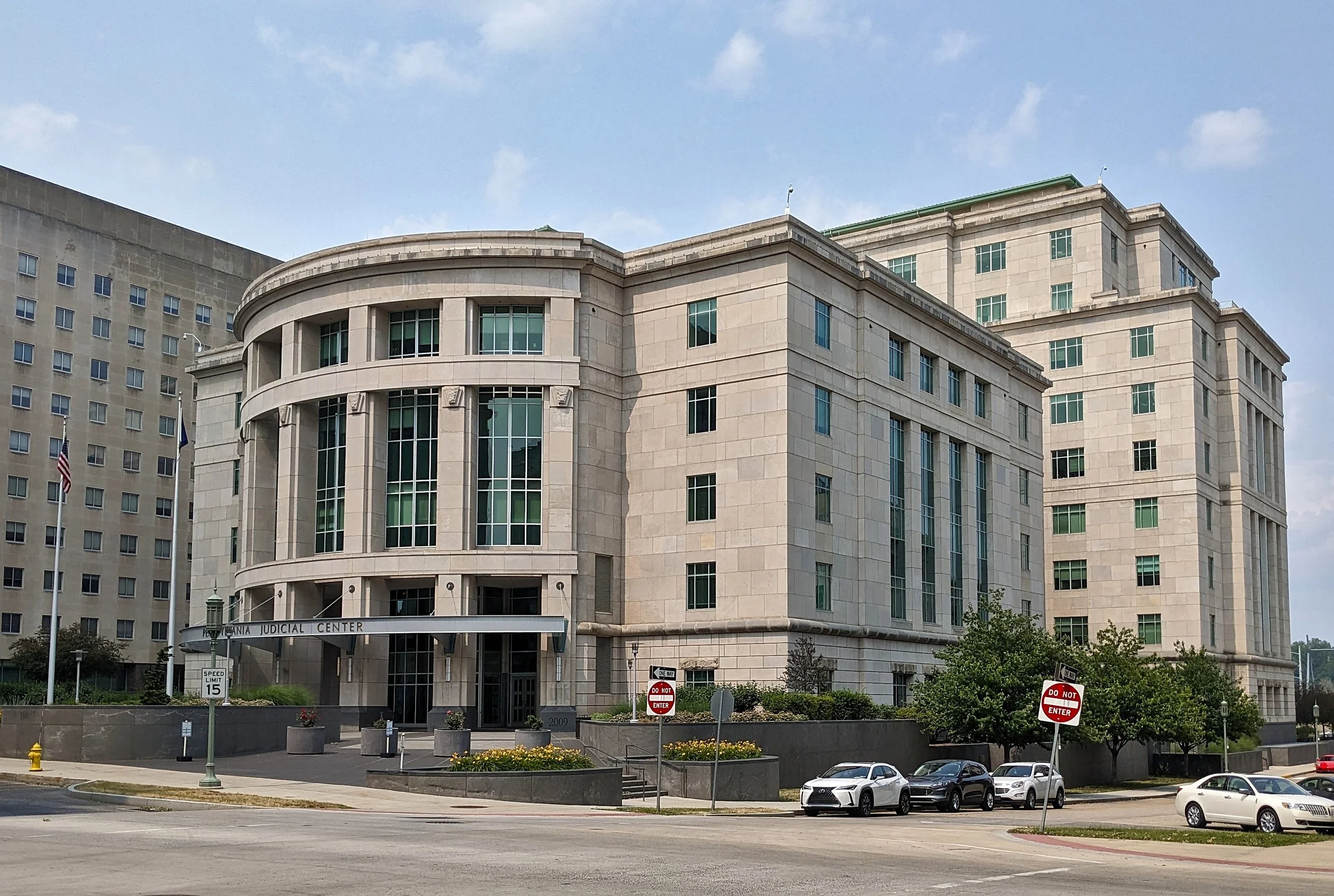
Photo: Pennsylvania Judicial Center, June 9, 2023. Archival context, not a photograph of this case. DutchTreat / Wikimedia Commons, CC BY-SA 4.0. Original photograph, platform display cropping may apply.
https://commons.wikimedia.org/wiki/File:Pennsylvania_Judicial_Center_view_from_South.jpg
https://creativecommons.org/licenses/by-sa/4.0/
