

Trump rejects Iran’s proposal. The costs and the unanswered questions remain.
Sunday, September 27, 2026
There’s an important change from yesterday’s report: Trump has now publicly rejected Iran’s latest proposal. What had been reporting about his private position is now something he has said himself. That’s a firmer fact. It still isn’t a settlement, a reopened shipping route, or an answer to the costs people are carrying.
Here’s where things stand this Sunday morning, with the dates kept attached to the developments.
The rejection is public; the next step is uncertain
Speaking to reporters on Saturday, September 26, Trump said he had rejected Iran’s offer. He also said he wanted a deal, but found this one unacceptable. AFP reported that Iran’s proposal involved reopening the Strait of Hormuz within a week, alongside conditions including relief from the American blockade and sanctions. Those were proposed terms, not concessions Washington had agreed to deliver.
On Sunday, Iranian Foreign Minister Abbas Araghchi maintained Tehran’s conditions for reopening the waterway, according to Deutsche Welle’s report citing Iranian state broadcaster IRIB. Iran also said it hadn’t received a definitive American response through mediators. That distinction matters: Trump’s public rejection is clear, while Iran is describing a diplomatic channel it says remains unfinished.
I wouldn’t turn either side’s account into a promise that peace is close. Nor does a rejected offer, by itself, tell us whether another workable agreement is possible. The practical test is what changes on the water and for civilians, not how confident either government sounds.
Sources: https://www.thejakartapost.com/world/2026/09/27/trump-rejects-iran-proposal-for-deal-to-reopen-hormuz
https://amp.dw.com/en/iran-sticks-to-hormuz-plan-after-trump-rejects-it/a-79447432
What the administration says it is defending
A September 24 White House policy statement opposed H. Con. Res. 89, which seeks to remove American forces from unauthorized hostilities involving Iran. The administration argues that restricting presidential action would put American personnel, allies and missions at risk. It also identifies preventing an Iranian nuclear weapon as a central objective.
That is the administration’s stated case for maintaining military flexibility. Its assertions about presidential authority are its legal position, not a court ruling resolving this dispute. The statement also invokes diplomacy backed by deterrence. Keeping that stated diplomatic aim in view is fair; measuring whether the strategy actually advances it is necessary.
Source: https://www.whitehouse.gov/wp-content/uploads/2026/09/SAP-H.Con_.Res_.-89-Sen.pdf
Fuel policy needs more than a headline
The domestic argument over diesel shows why announcements need careful reading. On September 23, Reuters reported that a White House official denied a report about preparations for a 90-day export ban. Energy Secretary Chris Wright said a flat ban wouldn’t work and could raise gasoline and jet-fuel prices, while describing discussions about voluntary measures.
Reuters also reported diesel above $6.50 a gallon at that point, amid disrupted supplies linked to the wars in Iran and Ukraine. That is a dated figure, not a newly checked Sunday pump-price average.
There’s a reasonable policy concern in Wright’s warning: an intervention meant to make one fuel cheaper can create costs elsewhere. Acknowledging that tradeoff is useful. People still deserve a clear explanation of what policy is actually being implemented and evidence of its results. Discussion of a measure should never be presented as proof it has already lowered anyone’s bill.
Gaza cannot disappear behind the shipping story
The latest OCHA situation report located for this update is dated September 18 and was published September 21. It describes continuing danger in Gaza from damaged buildings, shortages of equipment and fuel, and restrictions affecting humanitarian work. Its Gaza reporting period is mainly September 7–13, with some later incidents included. These are documented conditions from that report, not newly reported Sunday events.
OCHA also identified help on the way: a $2 million humanitarian allocation and a 1.5 million-litre fuel grant to support health and other essential services. It said more funding and sustainable solutions were needed. Both parts belong in the picture: assistance matters, and its existence doesn’t mean the needs have been met.
My standard for accountability stays practical: safer civilian lives, functioning essential services, reliable access to supplies, and a credible path away from further fighting. Those are outcomes worth checking after the speeches end.
Source: https://www.ochaopt.org/content/humanitarian-situation-report-18-september-2026
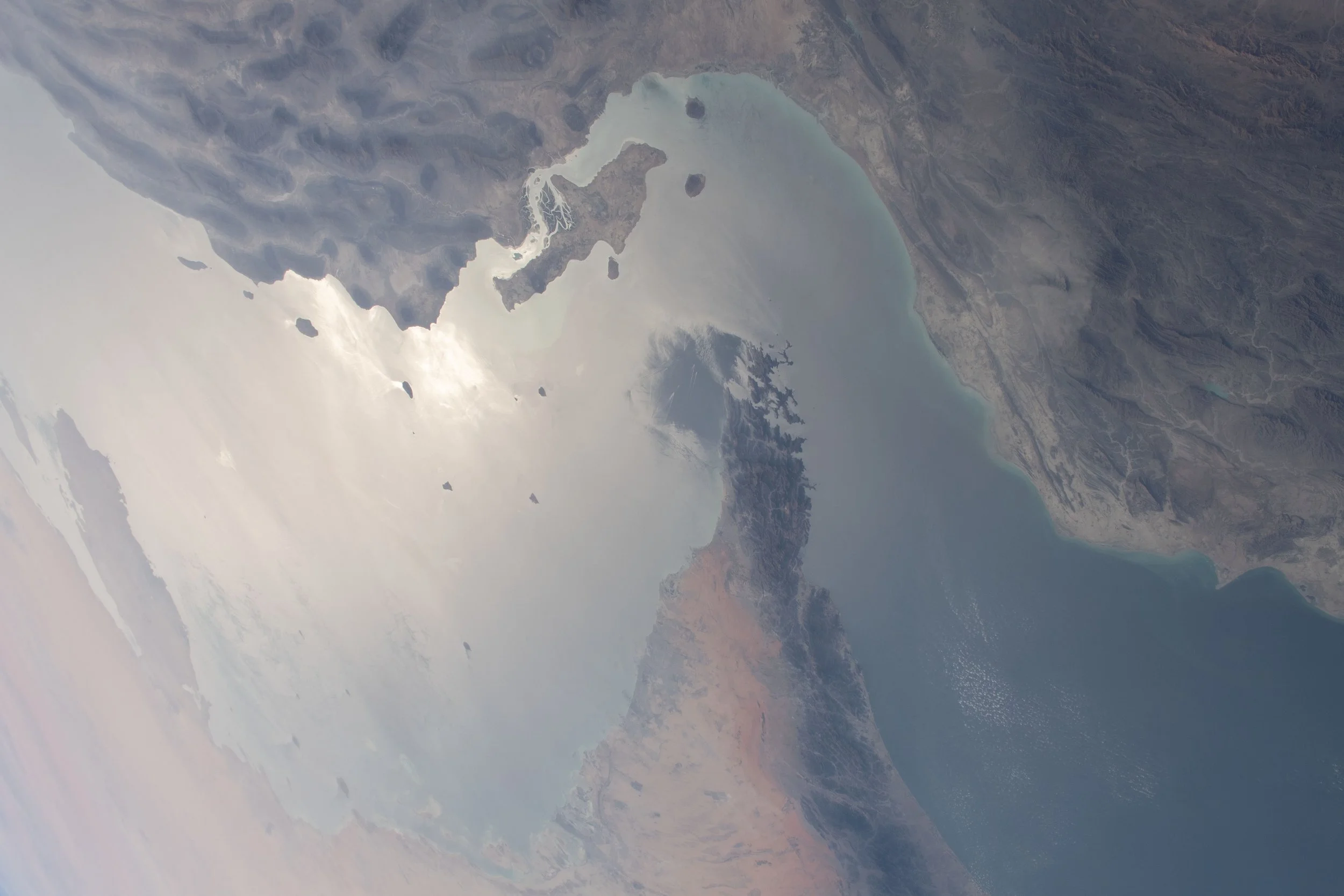
Archival view of the Strait of Hormuz, March 24, 2021. NASA Johnson Space Center, public domain. Contextual image, not current shipping conditions or an endorsement. Source/license: Source and public-domain license
