

I’m against Flock cameras. Privacy shouldn’t depend on a promise.
September 21, 2026 · Commentary by Mr. Wheels, with linked reporting and company responses.
I’m against Flock’s camera network. Going about an ordinary day shouldn’t mean accepting a searchable record of where your vehicle has been. Public safety matters. So does the freedom to live without having your movements collected just in case they become useful to somebody later.
That’s my position. It doesn’t require pretending every officer misuses a database or every camera is identical. It requires asking whether this amount of surveillance belongs in our communities in the first place.
What the cameras collect
Flock’s own data-privacy page says its automatic license plate reader system captures plate images, vehicle characteristics, timestamps and camera locations. The company says this ALPR system does not use facial recognition. It describes agency-controlled access, logged searches and automatic deletion, often after seven days depending on local rules.
Those distinctions matter. Calling every Flock product facial recognition would muddy the argument. But vehicle information connected to time and place still deserves serious scrutiny. My concern is what repeated sightings can reveal about someone’s routine, even when a camera isn’t identifying their face.
A recent warning from Boston
On September 15, Ars Technica reported that Boston had abandoned Flock. According to the city’s surveillance report, nationwide sharing occurred during the first days of its 2025 pilot despite a contract requiring sharing to be disabled. The city attributed that to a vendor error. That is the city’s account, not a court finding, and the pilot occurred last year.
For me, the lesson is practical: residents need proof that restrictions work. A contract can sound reassuring while the system behaves differently. A town considering a purchase should have to explain how it will check the actual settings, who will independently verify them, and what happens when a restriction fails.
Flock’s assurances deserve examination
Flock says customers choose their sharing settings and that searches are tied to users and recorded for review. Those are relevant safeguards, and they deserve to be described accurately. They don’t settle the question of whether a community should authorize the system.
In an August 13 analysis, the ACLU said a shorter default retention period could be an improvement, but questioned how evidence-preservation exceptions would operate. It also called for independent evaluation of auditing tools and questioned whether requiring a stated search purpose reliably prevents misuse. These are the ACLU’s assessments, rather than findings I’m presenting as settled by a court.
I agree with the demand for independent scrutiny. Keeping a record of a search is useful only if somebody reviews it, identifies abuse and acts. A check box or a drop-down reason doesn’t answer who is accountable when the stated purpose isn’t the real one.
What I want local officials to do
My recommendation is to reject new Flock contracts and pursue lawful termination of existing ones. While a system remains in use, officials should publish its contract, retention rules, sharing permissions and audit findings in language residents can understand. These are policy recommendations, not a claim that every jurisdiction already requires them.
Any claimed crime-solving benefit should come with context: how success was measured, how errors were counted, what the system costs and what alternatives were considered. A collection of success stories isn’t enough to evaluate an entire program. Residents deserve an honest accounting of both benefits and harms.
Oversight also needs a workable complaint process. Someone who believes their information was misused should be able to find a real contact, receive a response and understand the available review process. Officials should explain what happens to stored data and shared copies when a contract ends. Turning off a camera and resolving the data it collected are different tasks.
If you want to follow this locally, start with your city or county’s published contract and public-meeting agenda. Ask for the written sharing policy and latest audit. Keep questions specific, and don’t assume another city’s rules or failures automatically describe your own.
I don’t accept that wanting safer streets means accepting surveillance by default. Public officials should earn trust through evidence, enforceable limits and accountability. My answer to expanding Flock remains no.
Always keep it wheeling. Stay strong.
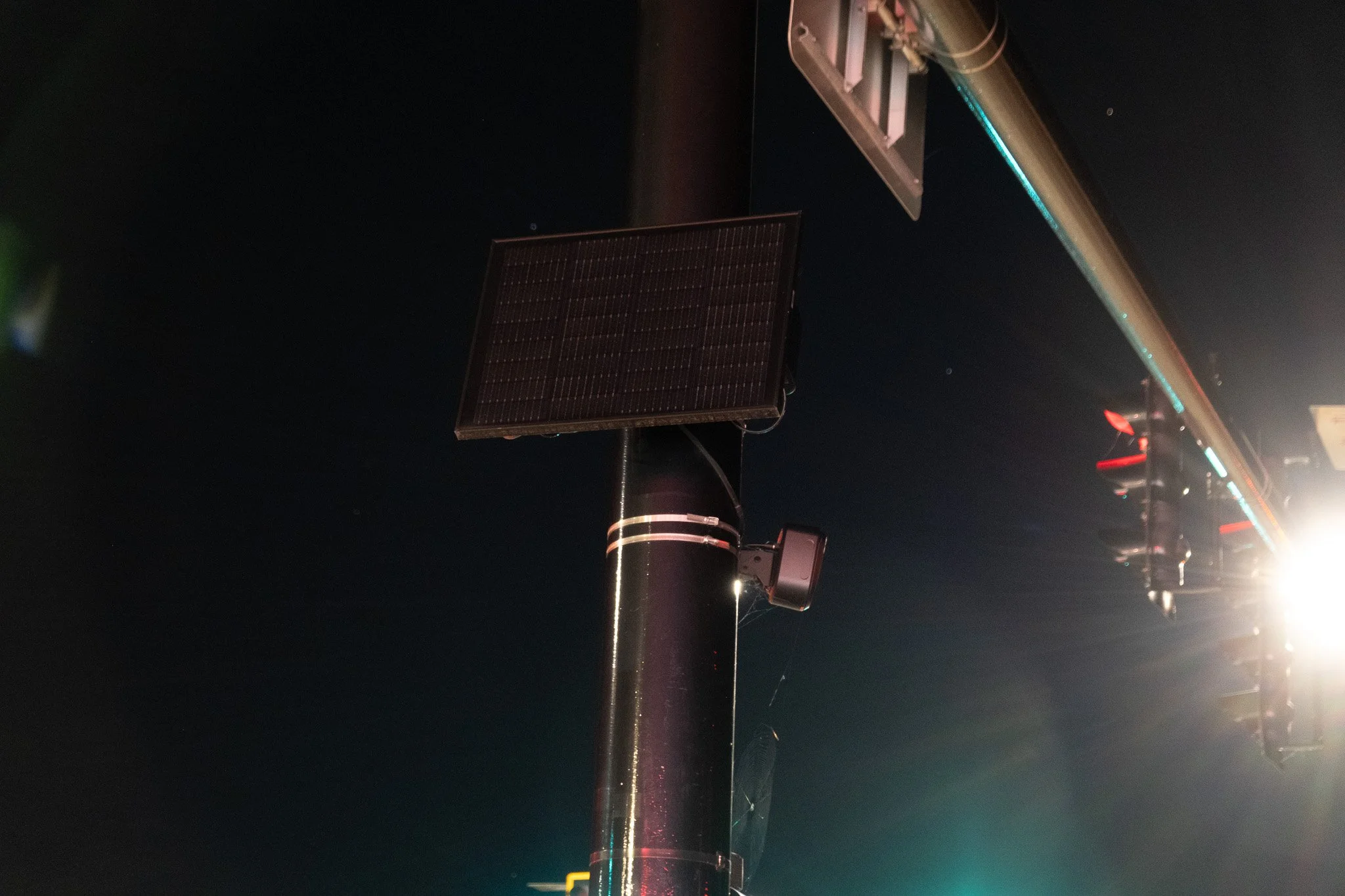
Illustrative photo: Flock camera and solar panel in La Crosse, Wisconsin, August 23, 2026. Photo by Snoowastaken, Wikimedia Commons, CC0 1.0. This is not a photograph of the Boston pilot.
