

A $90 payment is not a lower Medicare premium
October 3, 2026 | Mr. Wheels
A payment can help somebody cover a bill. It doesn't automatically mean the bill got smaller. That distinction matters in President Donald Trump's latest Medicare announcement, and it's where today's reporting starts.
The wider picture is mixed: the newest jobs report contains real manufacturing gains alongside weak overall hiring, while reporting about Iran points to unresolved decisions. In Gaza, a newly published account of reunited families shows how far a ceasefire announcement can be from everyday safety.
Medicare: compare the same numbers
The White House announced October 2 that eligible Medicare Part B enrollees would receive a one-time $90 payment from the Medicare Improvement Fund. It said more than 20 million people would benefit, with most direct deposits beginning in early October. It also listed exclusions, including people whose premiums are paid by Medicaid and those subject to income-related premium adjustments. This is an announced payment program, not confirmation that every eligible person has received money.
In a Friday-night post reported by Axios, Trump said Part B premiums were something “which we have already reduced by significant amounts.” That wording needs a clear comparison.
CMS's published standard monthly premium for 2026 is $202.90, up from $185 in 2025. That's a $17.90 monthly increase, not a year-over-year reduction. Those rates were announced last November; they aren't a new October increase.
There is another part of the administration's explanation. CMS says its action on spending for skin substitutes prevented an approximately $11 larger monthly premium increase. Savings against that projected alternative can exist while the actual premium still rises. A prevented increase and a cut from last year's bill are different claims.
My assessment: describing premiums as reduced without explaining that baseline is misleading. The payment may provide useful relief. It doesn't change the published standard premium, and it shouldn't be presented as though it does.
Sources: White House announcement, Axios on Trump's statement, CMS premium figures.
Jobs: credit the gains, keep the context
The Bureau of Labor Statistics reported October 2 that September payrolls increased by 29,000 and unemployment was 4.2%. It described both as little changed. Revisions lowered July and August employment gains by a combined 60,000.
Manufacturing added 9,000 jobs in September and was up 72,000 from its December 2025 low. That supports the numerical gain highlighted in the White House's Manufacturing Day proclamation. It deserves to be included, even in a critical account of the administration.
But a gain in one industry doesn't establish a broad hiring boom, and these figures alone don't prove which presidential policy caused a change. Accountability means reporting the encouraging number and the weaker overall picture together.
Sources: BLS September employment report, White House Manufacturing Day proclamation.
Iran and Gaza: don't turn uncertainty into a headline certainty
Axios reported October 3, citing three U.S. officials, that senior administration officials met at Camp David on Friday to discuss Iran and the Saudi-Houthi conflict in Yemen. Its account said Vice President JD Vance chaired the discussions. This is attributed reporting about deliberations; it is not, by itself, proof that a new military operation has been ordered.
Separately, Reuters published an October 2 account of children evacuated from Gaza as premature infants and reunited with family this year. It reported continuing Israeli airstrikes despite the ceasefire agreed between Israel and Hamas a year earlier. The reunions described began in March; they did not all happen this week. The new reporting follows families as they rebuild relationships amid continuing fear.
Those distinctions matter. Neither a meeting nor a diplomatic label tells us everything about what happens next, or what civilians are living through now.
Sources: Axios on Camp David discussions, Reuters, carried by AOL.
I want public claims measured against what people can actually verify: the premium on the notice, the full jobs report, an announced decision, and conditions on the ground. Useful relief deserves recognition. So do the limits of the claims made about it.
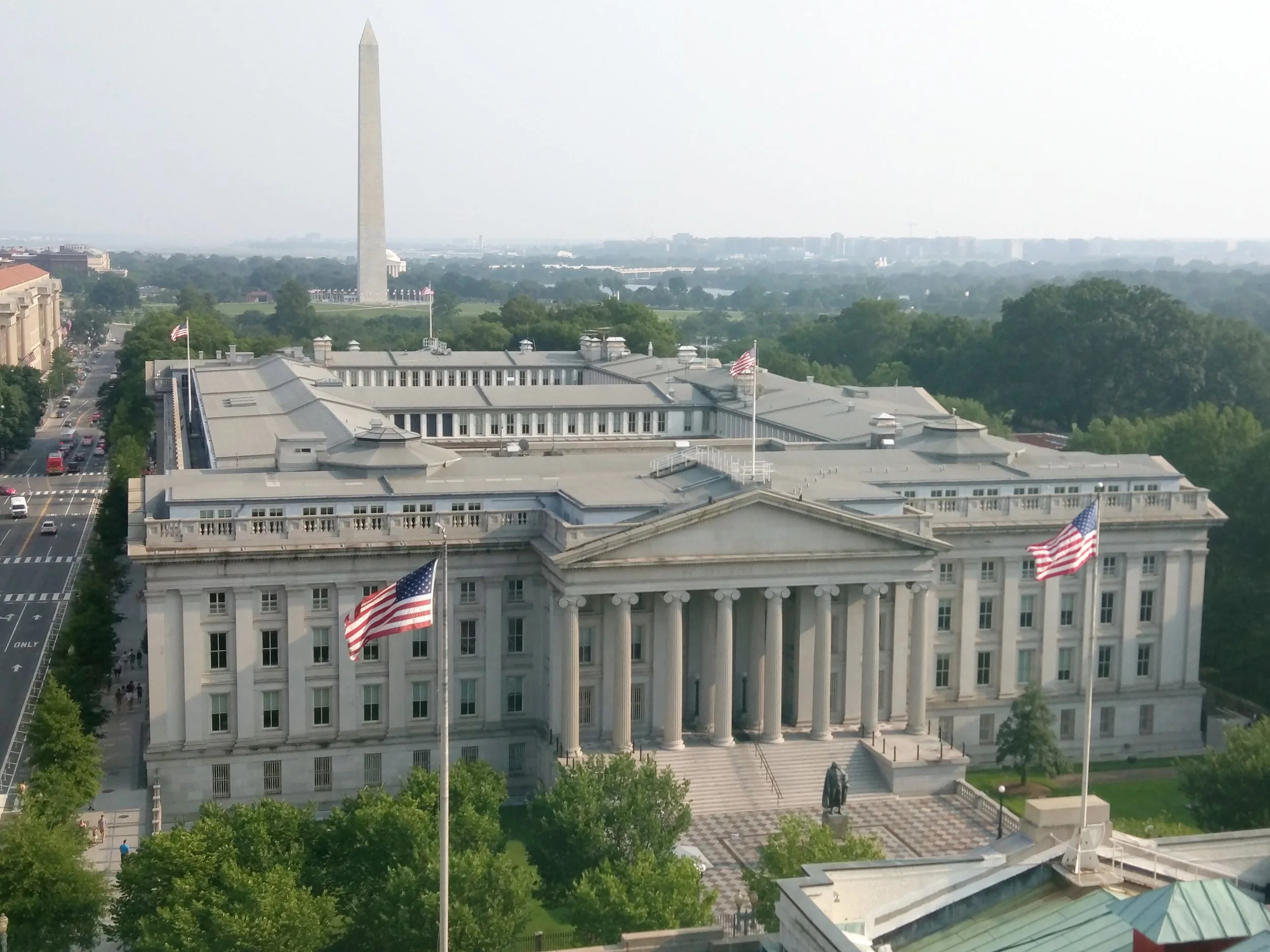
Photo: MeanieHyaena, U.S. Treasury building, July 24, 2015. Archival contextual photograph, not today's events. Source, CC BY 4.0. Original image; platform crops may apply.
