

What this week’s news tells us about how Washington is treating disabled and LGBTQ people (Oct. 19-25, 2026)
I spent this week reading everything I could find about what the administration did to two communities I care about: disabled people, my people, and the LGBTQ community, who have stood with us for decades. I'll be honest. By Friday I noticed a pattern, and it's hard to ignore. Different agencies, different targets, same playbook: add paperwork, cut the money, hide the data, and call it protection.
Here are ten stories from this week, along with my take on each one.
PART ONE: THE LGBTQ COMMUNITY
1. Trans kids on Medicaid just lost their coverage
A new HHS rule took effect Oct. 13 that bans federal Medicaid and CHIP money for gender-affirming care for anyone under 18 on Medicaid or under 19 on CHIP. That means puberty blockers, hormone therapy and surgery. Virginia has already stopped covering it. According to KFF, about 133,000 transgender young people live in states without bans and rely on Medicaid or CHIP for that care. Virginia is one of 22 states suing to stop the rule.
Source: Virginia Mercury, Oct. 21, 2026. https://mountainmedianews.com/va-lawmakers-spanberger-grapple-with-loss-of-federal-healthcare-funds-for-trans-youth/
Mr. Wheels' response: Read that again. The care is still legal. Families with private insurance can still get it. The only kids losing it are poor kids. That isn't about medicine. It's about who the government thinks it can push around. Disabled people know this move by heart, because Medicaid is our lifeline too. When they show you they'll pull a doctor-approved treatment from one group on Medicaid, believe them. We're on the same list.
2. The administration tried to cut off care for trans people in federal prison, and the Supreme Court said no, for now
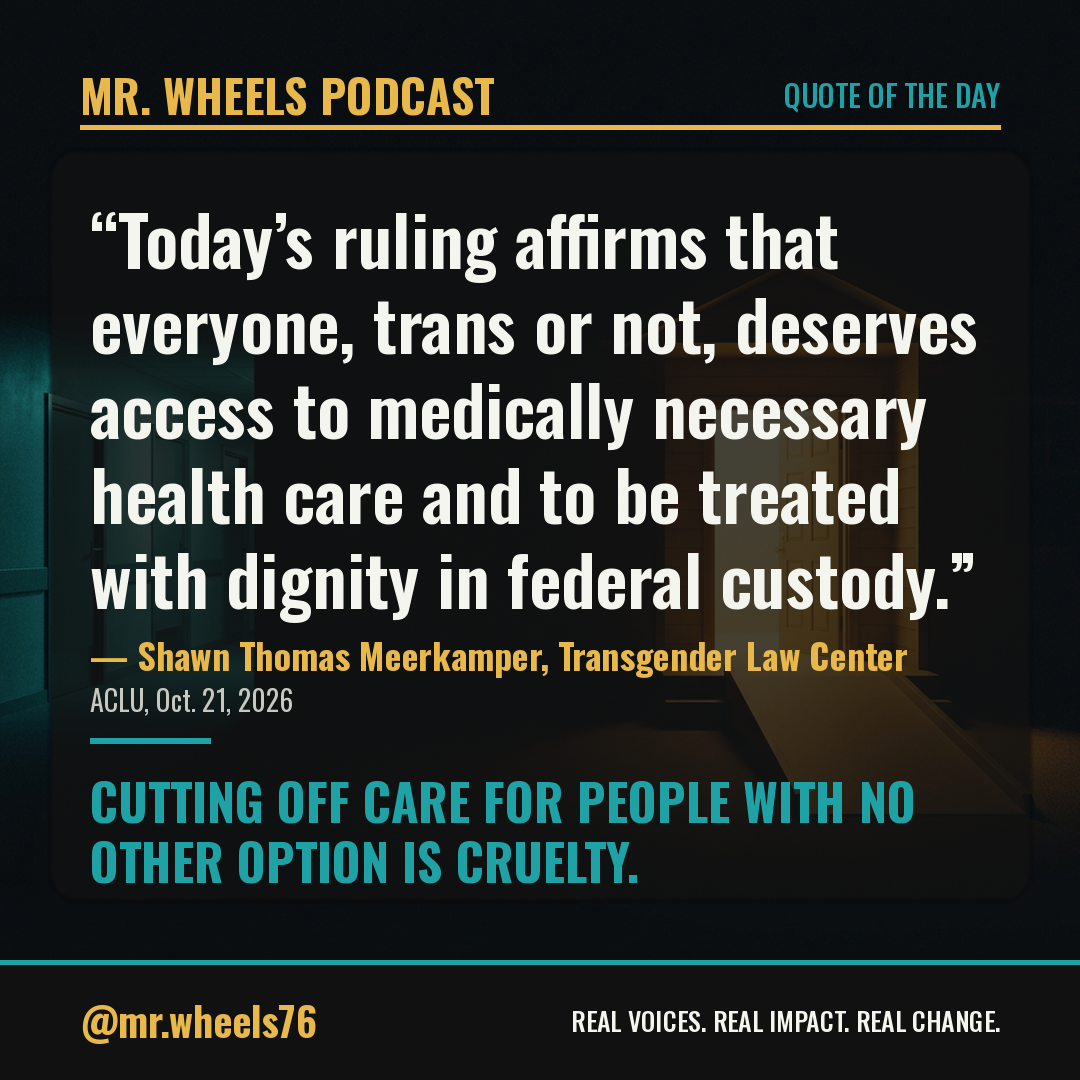
On Oct. 21 the Supreme Court refused to let the Bureau of Prisons immediately enforce a policy that would end hormone therapy and other treatment for transgender people in federal custody. A lower-court order blocking the policy stays in place while the case goes on. The ACLU says the class action covers about 2,000 people. Justices Alito and Thomas would have let the policy take effect.
Source: ABC News/Associated Press, Oct. 21, 2026. https://abcnews.com/US/wireStory/supreme-court-rebuffs-trump-administration-restrictions-medical-care-137448790
Mr. Wheels' response: This is a win, and we should take it. But don't miss the headline under the headline. The government fought all the way to the Supreme Court for the right to take medicine away from people who can't walk out of a cell to find another doctor. When you're locked up, the state controls your body. For a lot of disabled people living in institutions, that sounds familiar. Cutting off care for people who have no other option isn't security. It's cruelty with a badge on.
3. The Justice Department erased trans victims of prison sexual abuse
Two new Bureau of Justice Statistics reports on sexual abuse in prisons and jails put respondents into three boxes: man, woman or "other." People in that "other" box reported sexual abuse at roughly 32% in prison and 26% in jail. The word "transgender" shows up when the reports describe perpetrators, but not in the victim tables. Lesbian, gay and bisexual people in prison reported abuse by other prisoners at more than seven times the rate of straight prisoners.
Source: The Advocate, Oct. 22, 2026. https://www.advocate.com/politics/national/trump-transgender-prisoners-sexual-abuse
Mr. Wheels' response: If you don't count people, you don't have to protect them. That's the whole trick. They collected the data and then hid it behind the word "other." Disabled folks have watched agencies stop counting us too, and the services always vanish right after the numbers do. One in three. Say that number out loud. Then ask why the government doesn't want you to know whose number it is.

4. HUD is quietly backing away from LGBTQ housing protections
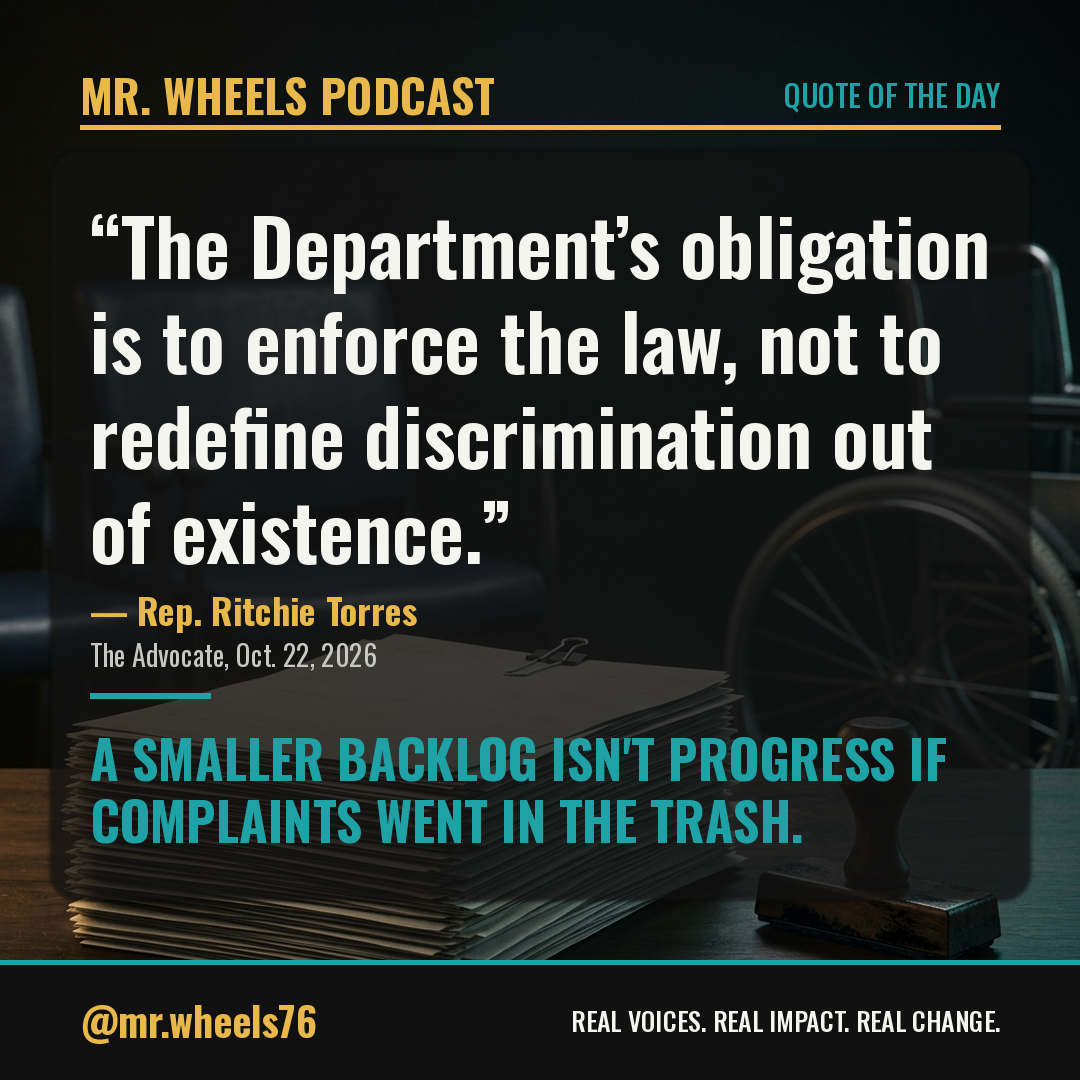
Rep. Ritchie Torres wrote to HUD Secretary Scott Turner demanding records on what happened to housing discrimination complaints based on sexual orientation and gender identity since January 2025. HUD says it cut its fair housing backlog by 27%, but the Government Accountability Office said it couldn't verify that number. The GAO also found HUD's workforce shrank 29% in 2025. HUD has also proposed letting federally funded shelters place people by sex assigned at birth.
Source: The Advocate, Oct. 22, 2026. https://www.advocate.com/politics/national/ritchie-torres-hud-lgbtq-letter
Mr. Wheels' response: A smaller backlog isn't progress if you got there by throwing complaints in the trash. HUD's own announcement listed disability discrimination cases, and those go through the same shrinking office. Torres said it best: the department's job is "to enforce the law, not to redefine discrimination out of existence." A shelter that can turn away a trans woman fleeing abuse is a shelter that has learned it can turn anyone away.
5. Military families are leaving the service to protect their trans kids
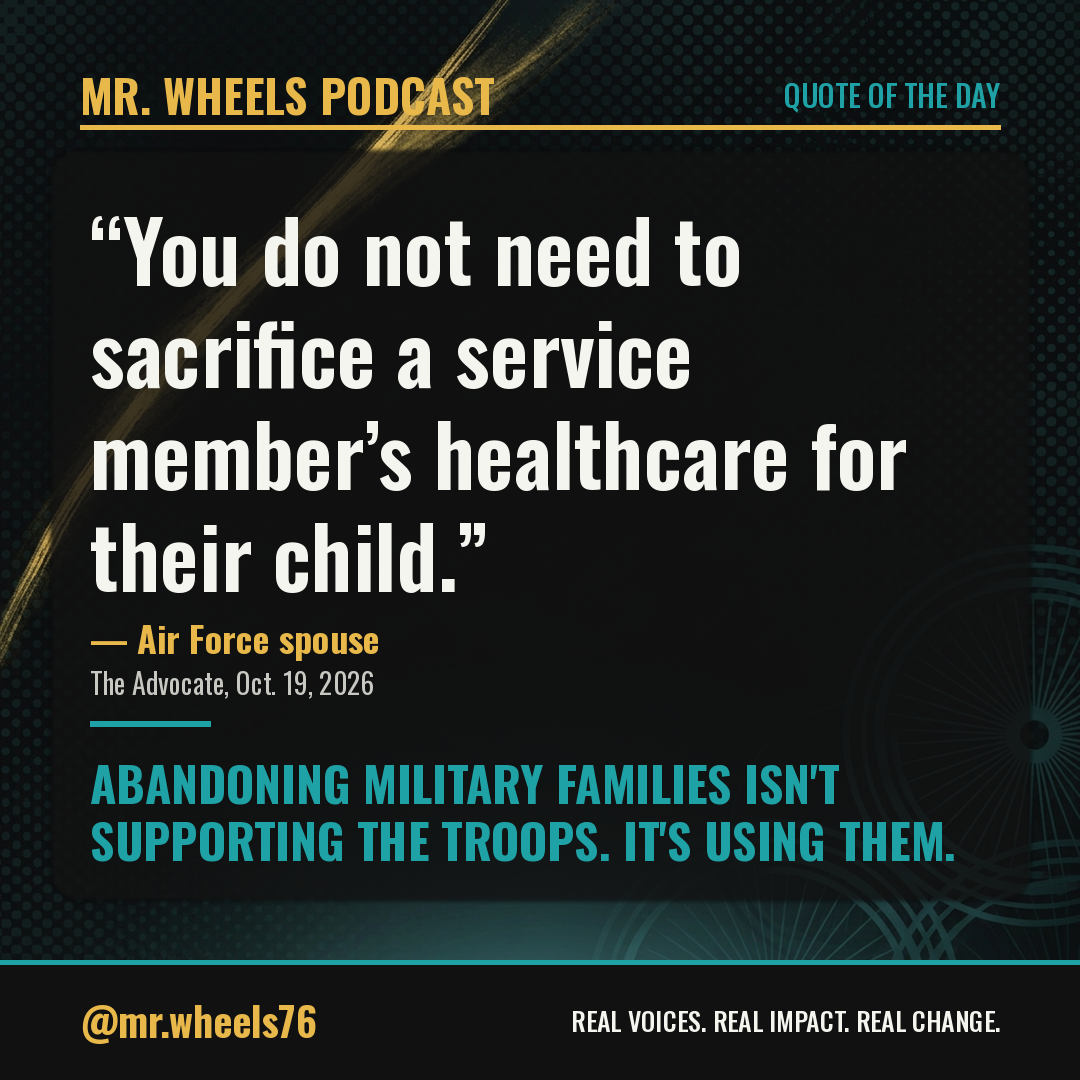
The Advocate talked with military families who say anti-trans health restrictions are pushing them out. Military health coverage has already restricted gender dysphoria treatment for dependents, and the House-passed 2027 defense bill would go further. One Air Force family expects about $4,000 in out-of-pocket costs by the end of the year. Her husband plans to retire early. A Navy spouse's wife has already retired after 20 years instead of 30.
Source: The Advocate, Oct. 19, 2026. https://www.advocate.com/politics/national/military-families-suffer-transgender-cuts
Mr. Wheels' response: These folks served. They moved every few years, gave up their stability and missed birthdays. Now they're being told to choose between their careers and their kids. Plenty of disabled veterans and their families already fight the system for every bit of care they've earned. If you won't take care of the families of people who wear the uniform, you're not "supporting the troops." You're using them.
PART TWO: PEOPLE WITH DISABILITIES
6. The "medically frail" test is still a trap
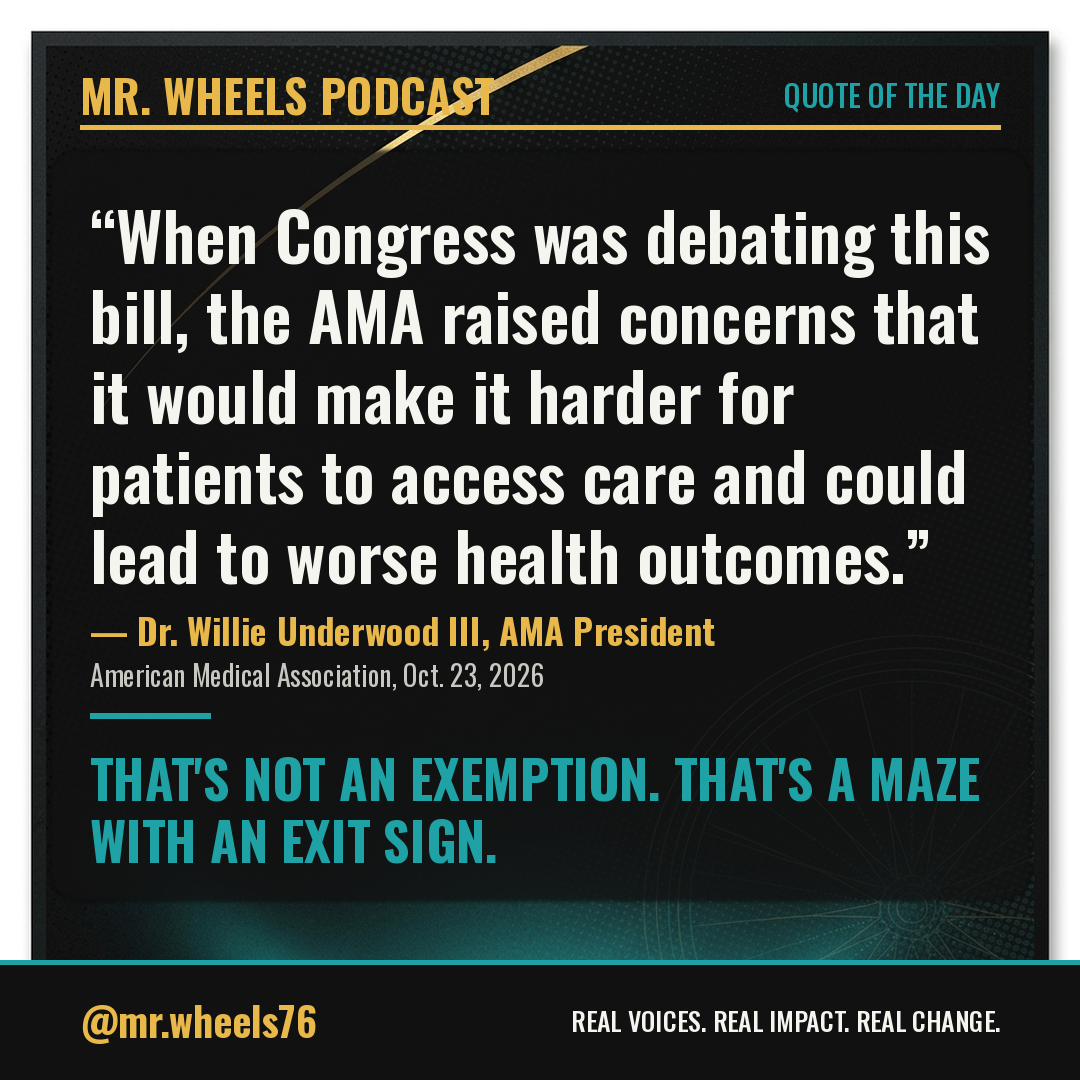
CMS released new guidance on how states can decide who counts as "medically frail" and can skip the Medicaid work requirements that start Jan. 1. States can use existing medical data for some people. But the guidance keeps the rule's standard that a condition must "significantly impair" your ability to meet the work requirements. The AMA warns that many people will still need extra paperwork or a manual review, and that eligible people could lose coverage. Twenty-six states are suing over the rule in Massachusetts v. Oz.
Source: American Medical Association, Oct. 23, 2026. https://www.ama-assn.org/health-care-advocacy/access-care/cms-releases-medical-frailty-work-requirement-guidance-medicaid
Mr. Wheels' response: Congress said people with serious disabilities should be protected. CMS added a second test on top of that. So now it isn't enough to have the diagnosis. You have to prove it hurts you enough. I've been filling out forms to prove I'm disabled my whole adult life. The chair doesn't convince them, and neither does the doctor's note. Every new hoop is a chance for a computer to decide you don't count. That's not an exemption. That's a maze with a sign on it that says "exit."
7. $1.2 billion held back from home care in California
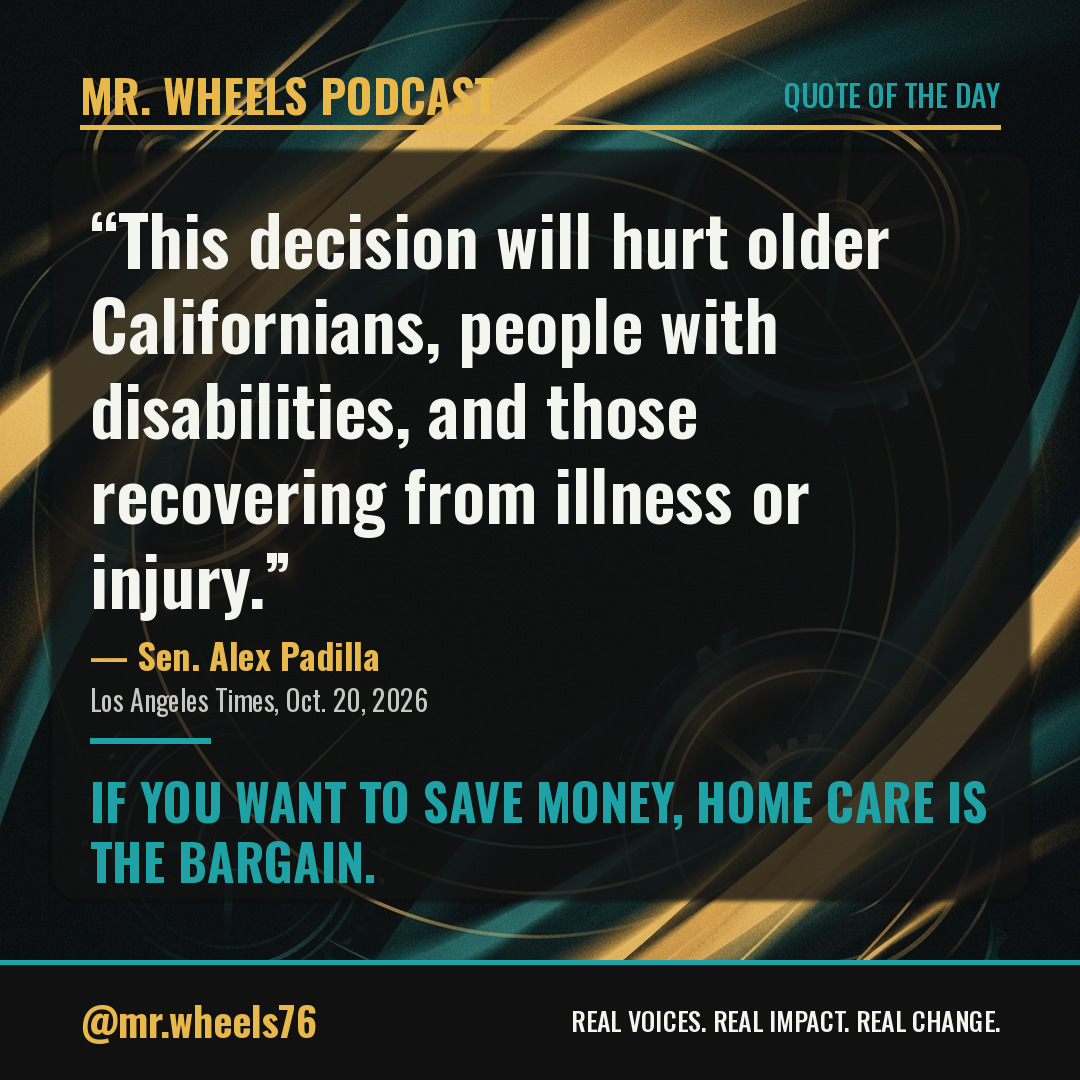
The administration is deferring another $1.2 billion in Medicaid money to California, citing possible fraud in the personal care program that helps older adults and disabled people with daily tasks. CMS Administrator Dr. Mehmet Oz offered no evidence of fraud, the LA Times reported. He said, "Many of you would carry groceries upstairs for your mom for free, but in California, they will pay you a lot of money for it." Governor Newsom's office says in-home care costs about $30,000 a year, compared with $137,000 for a nursing home.
Source: Los Angeles Times, Oct. 20, 2026. https://www.latimes.com/politics/story/2026-10-20/feds-hold-back-additional-1-2-billion-in-california-medicaid-reimbursements
Mr. Wheels' response: "Carry groceries upstairs." That's how he sees our care. Bathing, dressing, getting in and out of bed, not ending up in a nursing home. That's what home care pays for. And the family members doing it are often giving up jobs to keep someone they love at home. If you want to save money, home care is the bargain. If you want people locked away out of sight, keep cutting it.
8. The companies running Medicaid's computers won't show their work
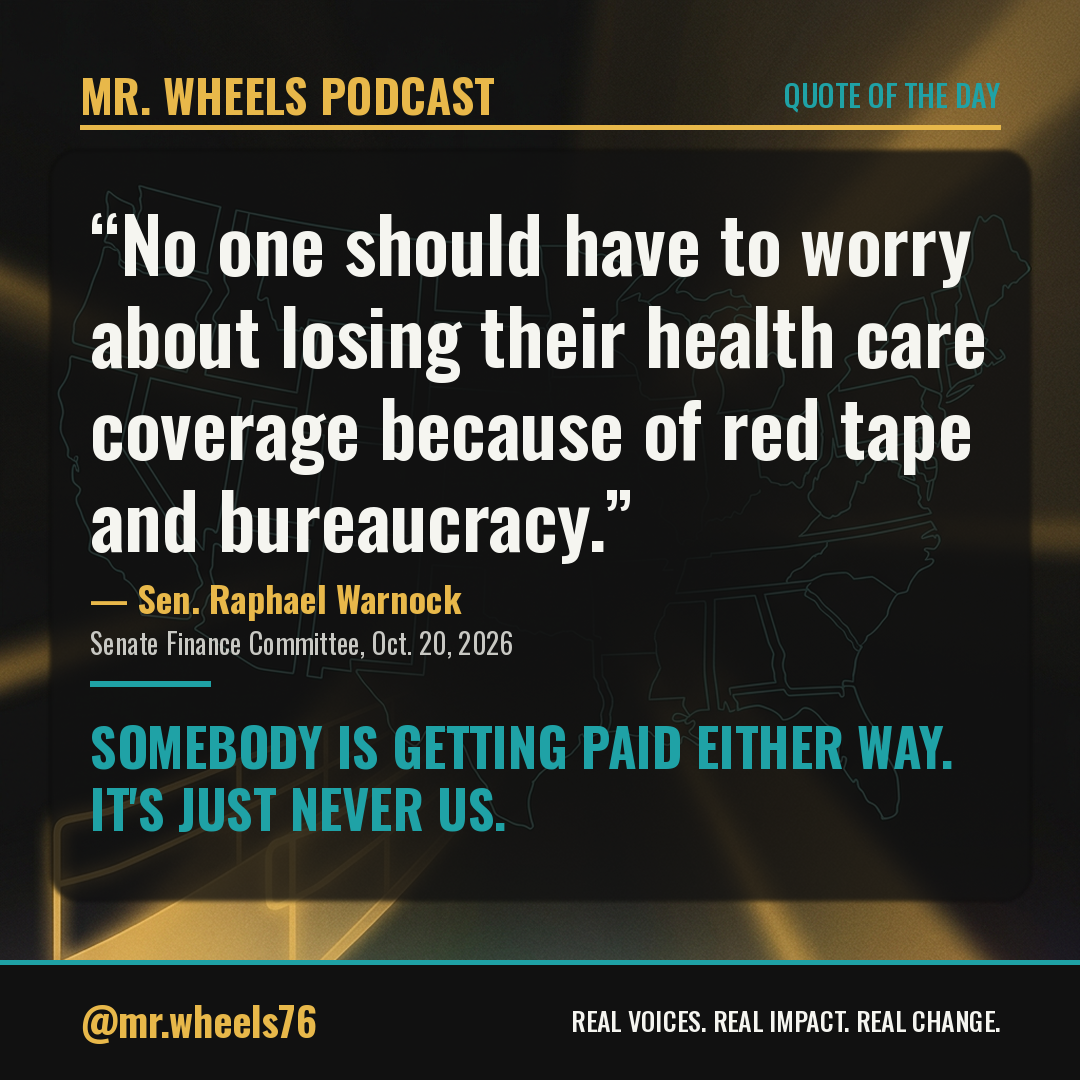
Senate Democrats Ron Wyden, Elizabeth Warren and Raphael Warnock released a report on five big Medicaid contractors: Maximus, Gainwell, General Dynamics IT, Conduent and Deloitte. Those firms will run the systems for the new work requirements. None of them handed over data on how many people their systems flagged as ineligible. None gave meaningful detail on how they test for accuracy, and none turned over their contracts. KFF notes that when the law passed, the CBO estimated it would cut Medicaid by $911 billion and leave 7.5 million more people uninsured.
Sources: Senate Finance Committee, Oct. 20, 2026, https://www.finance.senate.gov/ranking-members-news/wyden-senate-democrats-expose-shortfalls-and-stonewalling-among-for-profit-medicaid-contractors-ahead-of-massive-disenrollment-caused-by-republican-health-care-cuts ; KFF, Oct. 21, 2026, https://www.kff.org/elections/midterm-election-update-medicaid-changes/
Mr. Wheels' response: So the plan is to hand our health care to companies with a track record of kicking eligible people off, and those companies won't even show Congress how often they get it wrong. A glitch to them is a missed wheelchair repair, a missed prescription or a missed aide to me. Somebody is getting paid either way. It's just never us.
9. ICE tackled a disabled U.S. citizen walking to school
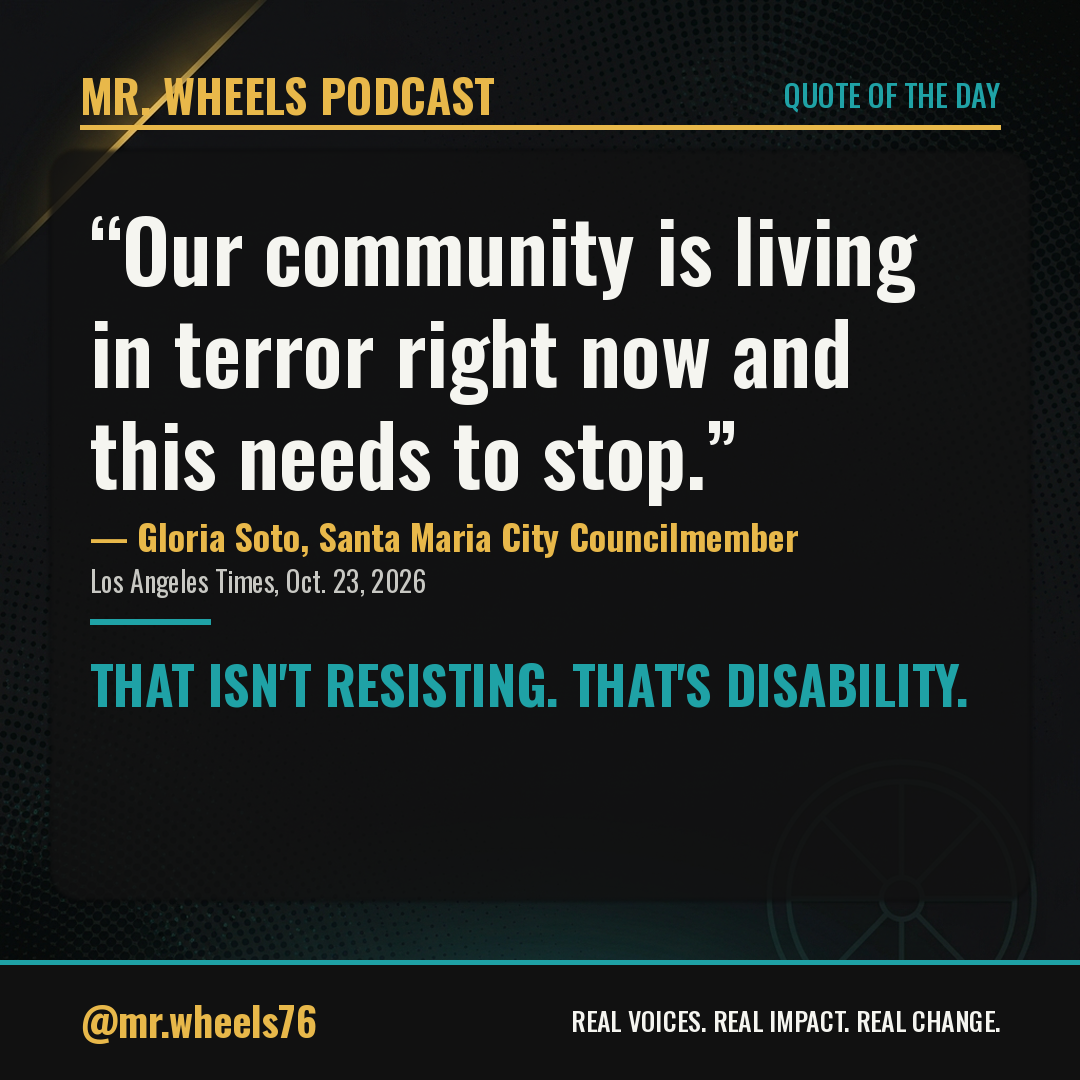
In Santa Maria, California, two ICE agents tackled a 20-year-old high school student from behind as he walked to school. He's a U.S. citizen with limited verbal communication, he's on an IEP, and he lives in a group home for adults with developmental disabilities. He had surgery on his wrist. ICE said agents believed he "matched the description" of their target and claimed he resisted. His mentor said the student told the agents repeatedly that the handcuffs were hurting him.
Source: Los Angeles Times, Oct. 23, 2026. https://www.latimes.com/politics/story/2026-10-23/santa-maria-high-school-student-u-s-citizen-is-injured-as-ice-detains-him
Mr. Wheels' response: This one made me sick. A young man who worked for years to build the confidence to walk to school alone. A lot of disabled people can't answer rapid-fire questions from masked strangers, or can't follow commands shouted from behind. That isn't resisting. That's disability. When agents can't tell the difference, every disabled person of color is one bad guess away from the hospital. I want an independent investigation, and I want training that treats disability as something other than a threat.
10. 650,000 people are waiting for home and community care, and the cuts haven't even hit yet
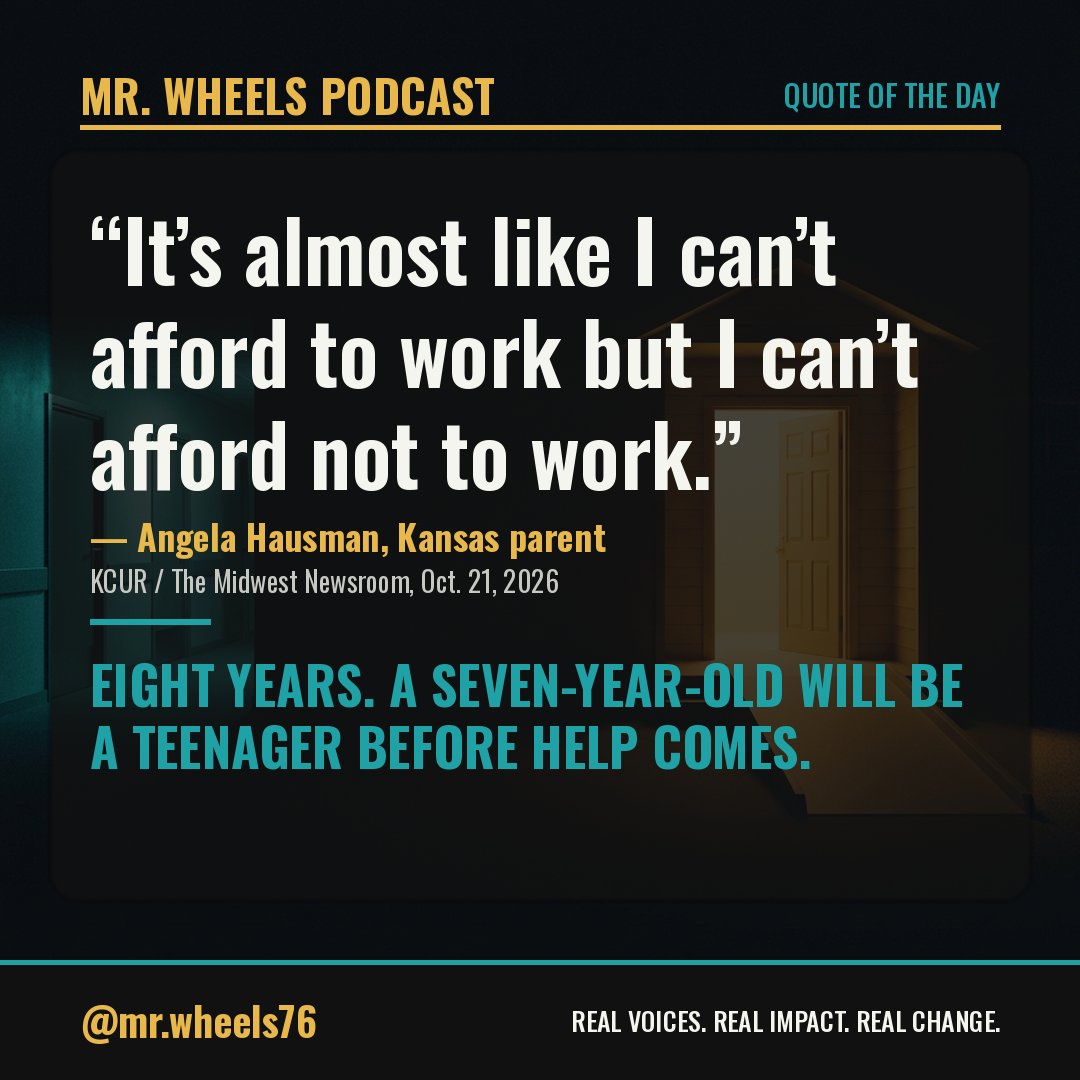
About 650,000 people are on waiting lists for Medicaid home and community-based services, according to KFF. That's up 7% since 2025. In Kansas, one family was told the wait for the intellectual and developmental disability waiver is eight years. Advocates told the Midwest Newsroom they're worried about what the federal Medicaid cuts in H.R. 1 will do to these programs.
Source: KCUR / The Midwest Newsroom, Oct. 21, 2026. https://www.kcur.org/health/2026-10-21/kansas-disability-medicaid-waiver-waitlist
Mr. Wheels' response: Eight years. A seven-year-old in that story will be a teenager before help comes. These waivers are what keep people out of institutions and keep parents working. One advocate called what's coming "a perfect storm." She's right, and Washington is the one seeding the clouds.
WHERE WE OVERLAP
If you read all ten together, you see one story. Trans disabled people get hit twice: once by the Medicaid cuts and once by the attacks on their care and identity. Disabled LGBTQ people in prisons, shelters and group homes are the ones the government stops counting first. The tools are the same every time: more paperwork, less money, hidden data and fear. And so is the answer: we show up for each other.
WHAT YOU CAN DO
Check your Medicaid status now and keep copies of everything. The work rules start Jan. 1.
Call your senators at the Capitol switchboard, (202) 224-3121, and ask them to back repeal of the work requirements and to protect home and community-based care.
Vote. The midterms are days away, and Medicaid is on the ballot whether it's printed there or not.
Share this with someone in the other community. Disabled folks, check on your LGBTQ friends. LGBTQ folks, check on your disabled friends. We're stronger together.
Real voices. Real impact. Real change.
— Mr. Wheels