

Access is a daily responsibility, not a grand-opening photo
October 9, 2026 · Mr. Wheels · Community guide
A door can have an accessibility button and still be impossible to use. Put a giant planter in front of it, and the button becomes decoration. Today's meme makes that point with a little humor, but the practical question deserves a serious answer: does access still work after the furniture, deliveries and decorations arrive?
I want accessibility treated as part of running a place well. People should be able to show up for coffee, an appointment or an ordinary afternoon without negotiating a new obstacle course. A welcoming message matters. A usable entrance matters more.
Keep the access you already built
The Justice Department's small-business ADA primer says accessible routes must stay clear of obstructions, including furniture, display racks and potted plants. It also explains that an alternative accessible entrance should be open whenever other public entrances are open. These are existing accessibility principles, not a newly announced rule.
The legal requirement also includes maintenance. Title III regulation 36.211 requires covered public accommodations to maintain required accessible features in usable operating condition. It allows isolated or temporary interruptions for maintenance or repairs. That exception doesn't turn an access feature into permanent storage space.
A breakdown and a routine habit of blocking a route are different situations. Businesses need a plan for both: get equipment repaired, and stop creating avoidable barriers in the first place.
Make checking access somebody's actual job
Here is the routine I'd like to see: before opening, check the route customers will use. Then check again after a delivery, a furniture change or a busy event. Assign responsibility to a person on the shift instead of assuming somebody else will notice.
Can someone reach the door control? Has a chair drifted into the route? Did a delivery end up in the space beside an accessible counter? Is a sign sending people to an entrance that is locked? These are practical questions staff can ask before a customer has to ask them.
The point isn't to turn every employee into an architect. Technical compliance needs the right expertise. The everyday responsibility is to notice obvious obstructions, report broken equipment and keep agreed access arrangements working.
Explain problems honestly
When something fails, vague reassurance isn't useful. Tell people what is unavailable, what usable alternative exists and whom to contact. If the repair time is unknown, say that rather than offering a confident guess.
For example, an accurate access notice could explain that a lift is out of service and identify a genuinely available step-free route. If there isn't one, don't describe the building as fully accessible anyway. People need real information to make their own plans.
Don't automatically grab a wheelchair or decide that carrying someone is the solution. Ask what assistance the person wants and respect the answer. A staff member's enthusiasm doesn't replace somebody else's choice, safety or dignity.
Listen, fix, then keep it fixed
A customer who reports a barrier is giving you useful information. Start with the specific problem. Thank them, identify who can address it and explain the next step. Defending the intention behind a decorative display won't make the route wider.
I also want businesses to close the loop. If you promise to move something, move it. If the same problem returns next week, change the routine that keeps causing it. A correction that lasts ten minutes isn't much of a correction.
Different people need different access features. Invite feedback without demanding someone's diagnosis, and avoid assuming one customer's experience proves the entire space works for everybody. Good listening should lead to concrete changes, not another poster about inclusion.
The legal details depend on the facility and the circumstances; the linked federal guidance is a starting point for understanding responsibilities. My everyday standard is straightforward: access should survive the normal working day.
Keep the route clear. Keep the equipment working. Keep people informed. And yes, sometimes the first useful step really is moving the plant.
Always keep it wheeling. Stay strong.
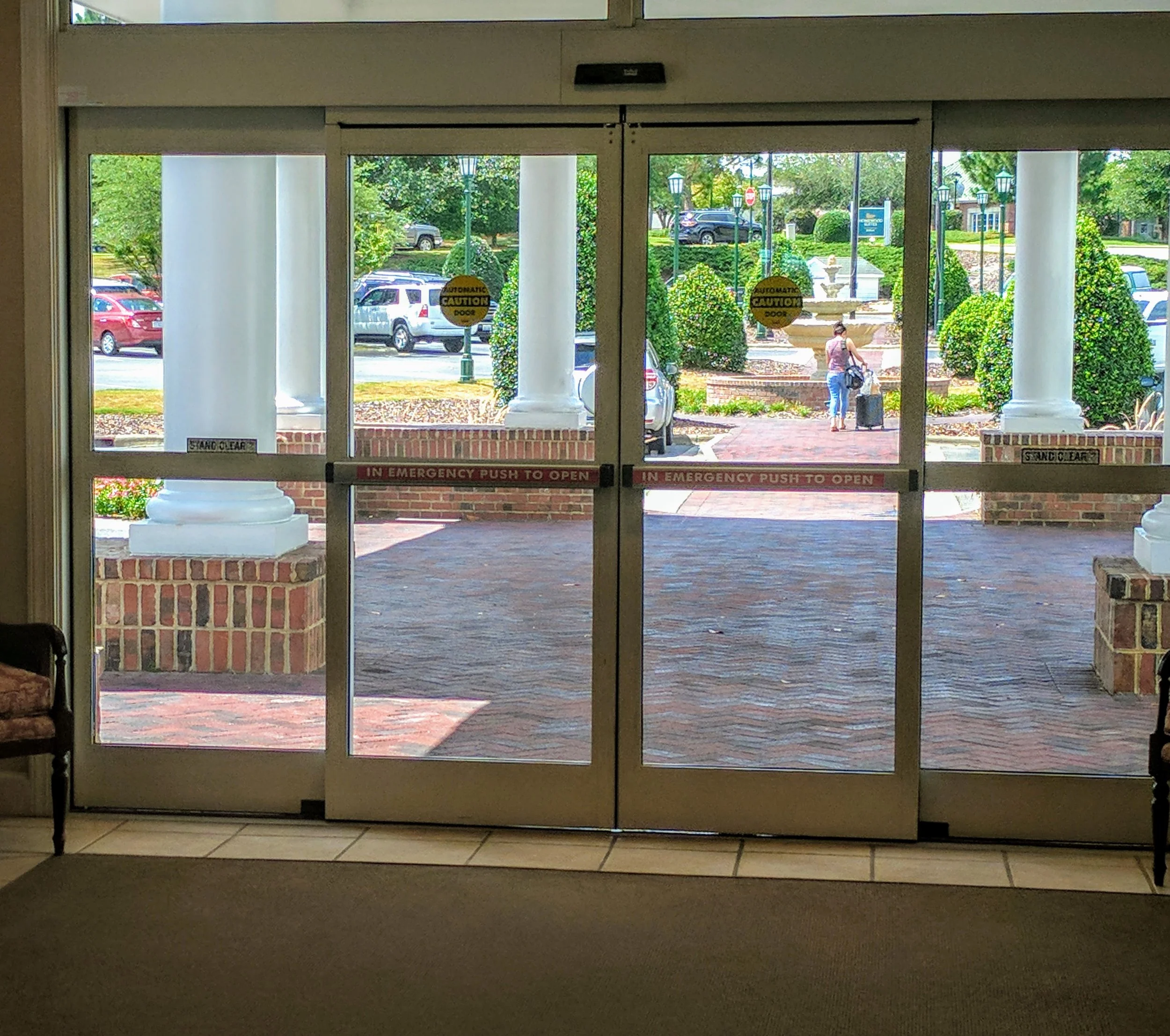
Photo: Automatic Door with Bars, Scott Brody, August 12, 2017, CC BY-SA 4.0. Unaltered archival contextual photo; the pictured hotel is not accused of an access violation.
